Communal Violence in India: Causes, Constitutional Safeguards, Major Incidents, and Way Forward | UPSC/JKAS Internal Security & Indian Society
Communal Violence in India – causes, constitutional safeguards, major incidents, and way forward explained for UPSC and JKAS Internal Security and Indian Society preparation.

Introduction Communal violence refers to violent conflicts between communities identified primarily by religion, often resulting in loss of life, destruction of property, displacement of people, and long-term social polarization. In a diverse and plural society like India—where multiple religions, cultures, and identities coexist—maintaining communal harmony is essential for national integration, social stability, and democratic governance. … Read more
Insurgency in Jammu & Kashmir: Causes, Major Militant Groups, Government Response and Current Status | UPSC/JKAS Internal Security

Insurgency in Jammu and Kashmir causes militant groups government response and current status UPSC JKAS internal security analysis

Introduction The insurgency in Jammu and Kashmir (J&K) refers to the armed separatist movement that began in 1989 against Indian administration in the region. It is one of the longest-running internal security challenges faced by India, involving militant groups seeking either independence for Kashmir or its merger with Pakistan. The conflict has been shaped by … Read more

Khalistan Insurgency in Punjab: History, Causes, Major Events and Current Status | UPSC/JKAS Internal Security

Khalistan Insurgency in Punjab – history, causes, major events and current status explained for UPSC and JKAS internal security preparation

Introduction The Khalistan insurgency refers to the separatist militant movement that emerged in the Indian state of Punjab during the late 1970s and reached its peak in the 1980s–early 1990s, demanding the creation of an independent Sikh state called Khalistan. The movement drew upon a combination of political grievances, religious identity, and regional issues, and … Read more

Insurgency in Manipur: Causes, Major Militant Groups, Ethnic Conflict and Current Status | UPSC/JKAS Internal Security Guide

Insurgency in Manipur – causes, militant groups, ethnic conflict and current security situation explained for UPSC and JKAS internal security preparation

Introduction The insurgency in Manipur represents one of the most complex and long-running internal security challenges in Northeast India. Insurgency generally refers to an organized armed rebellion against the authority of the state, often driven by political, ethnic, or socio-economic grievances. In Manipur, the insurgency has been shaped by a combination of historical grievances, ethnic … Read more

Insurgency in Meghalaya: Causes, Major Militant Groups, and Current Status | UPSC/JKAS Internal Security

Insurgency in Meghalaya – causes, major militant groups, and current status explained for UPSC and JKAS Internal Security.

Introduction The insurgency in Meghalaya forms an important component of the broader internal security challenges in Northeast India. Insurgency refers to an organized armed movement against the authority of the state, usually driven by ethnic identity, political aspirations, economic grievances, or concerns over migration and cultural preservation. In Meghalaya, the insurgency emerged primarily due to … Read more

Insurgency in Assam: Causes, Evolution, Peace Accords, and Current Status | UPSC/JKAS Internal Security

Insurgency in Assam – causes, evolution, peace accords and current status explained for UPSC and JKAS internal security preparation

Introduction Insurgency refers to an organized armed rebellion against the authority of the state, often driven by political, ethnic, ideological, or economic grievances. In India, the North-Eastern region has witnessed several insurgent movements due to its unique historical, ethnic, and geopolitical characteristics. Among the states in the region, Assam has experienced one of the most … Read more

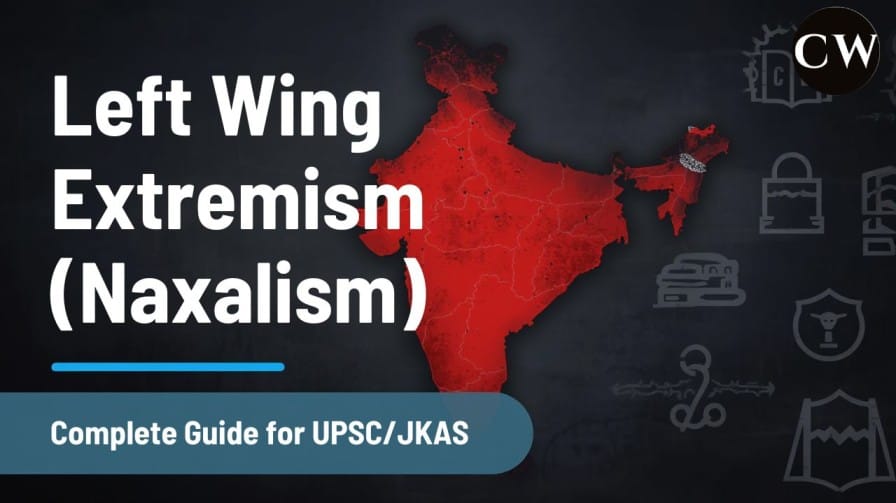
Left Wing Extremism (Naxalism) in India: Complete Guide for UPSC/JKAS Aspirants

Left Wing Extremism (Naxalism) in India – Complete Guide for UPSC and JKAS Aspirants

Introduction Left Wing Extremism (LWE), commonly referred to as Naxalism, is one of the most significant internal security challenges faced by India. It represents an armed insurgency driven by extremist ideological groups that seek to overthrow the democratic state through violent revolutionary means. According to the Ministry of Home Affairs, Left Wing Extremism refers to … Read more

Introduction to Internal Security: Meaning, Evolution, and Significance for UPSC/JKAS Aspirants

Introduction to Internal Security: Meaning, Evolution and Significance for UPSC and JKAS aspirants

Introduction Internal security constitutes one of the most critical pillars of national security. While external security focuses on protecting a nation from foreign aggression, internal security deals with safeguarding the country from internal threats that can undermine stability, governance, and constitutional order. In a diverse and populous democracy like India, maintaining internal security is essential … Read more

Environmental Migration and Internal Security: Climate Change, Human Mobility, and National Stability

Illustration showing environmental migration and its impact on internal security — depicting displaced people, climate change effects, and national borders, symbolizing awareness of human and environmental security challenges.

Environmental migration is emerging as one of the most significant non-traditional internal security challenges of the twenty-first century. This comprehensive guide explains how climate change, environmental degradation, and human mobility influence governance, urbanisation, resource competition, organised crime, border management, and national security. Designed for UPSC, JKPSC, JKAS, CAPF, and State PCS aspirants, this chapter provides conceptual clarity, analytical depth, government initiatives, way forward, FAQs, and a comprehensive mind map.