
Environmental Migration and Internal Security: Climate Change, Human Mobility, and National Stability

Illustration showing environmental migration and its impact on internal security — depicting displaced people, climate change effects, and national borders, symbolizing awareness of human and environmental security challenges.

Environmental migration is emerging as one of the most significant non-traditional internal security challenges of the twenty-first century. This comprehensive guide explains how climate change, environmental degradation, and human mobility influence governance, urbanisation, resource competition, organised crime, border management, and national security. Designed for UPSC, JKPSC, JKAS, CAPF, and State PCS aspirants, this chapter provides conceptual clarity, analytical depth, government initiatives, way forward, FAQs, and a comprehensive mind map.
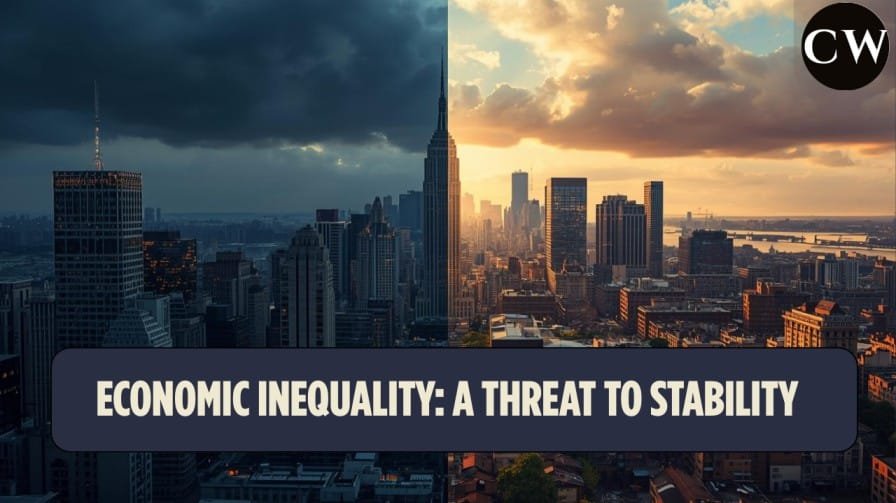
Economic Inequality and Internal Security: Understanding the Link Between Development and Stability

Educational illustration showing economic inequality and its impact on social and national stability, with contrasting wealth symbols and balanced design.

Economic inequality is more than a question of income or wealth—it is a critical determinant of social cohesion, democratic stability, and internal security. This chapter examines how unequal access to opportunities, regional disparities, unemployment, and governance deficits can gradually weaken public trust, create social alienation, and provide opportunities for organised crime, extremist groups, and anti-state actors to exploit public grievances. Through conceptual analysis, Indian and international case studies, intelligence perspectives, government initiatives, and emerging challenges, the chapter demonstrates that inclusive development is not merely an economic objective but a strategic investment in national security. It equips aspirants with a comprehensive understanding of how development and security reinforce one another in a modern democratic state.