Naxal-Free India: Evolution, Strategy, Achievements and the Future of Left-Wing Extremism in India
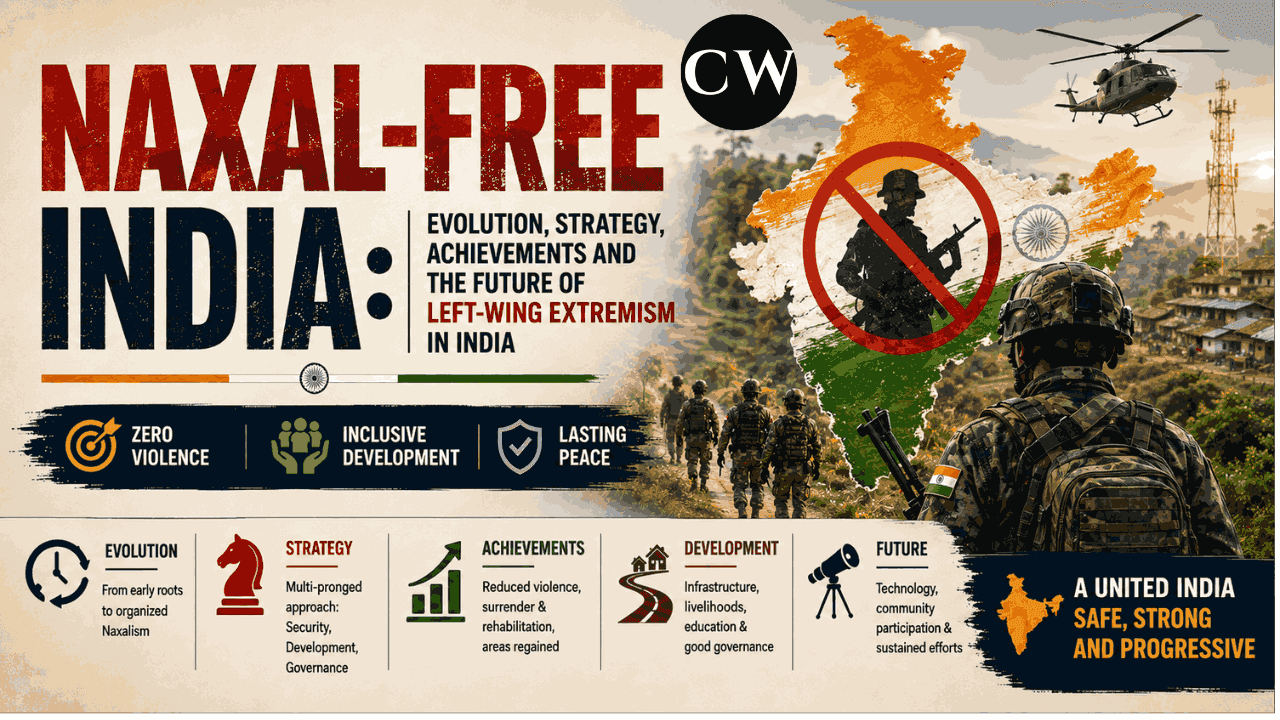
Naxal-Free India Evolution, Strategy, Achievements and the Future of Left-Wing Extremism in India

India’s journey from the Naxalbari uprising of 1967 to becoming Naxal-free in 2026 represents one of the most remarkable achievements in the history of its internal security. This chapter provides a comprehensive understanding of Left-Wing Extremism (LWE) by examining its ideological foundations, historical evolution, causes, impact on national security, and the transformation of India’s counter-insurgency strategy. It explains how an integrated approach based on security, development, rehabilitation, and good governance successfully weakened Maoist influence while restoring peace and democratic governance in conflict-affected regions. Through detailed analysis, case studies, timelines, and practical insights, the chapter highlights the lessons India’s experience offers for addressing contemporary and future internal security challenges.


Economic Inequality and Internal Security: Understanding the Link Between Development and Stability

Educational illustration showing economic inequality and its impact on social and national stability, with contrasting wealth symbols and balanced design.

Economic inequality is more than a question of income or wealth—it is a critical determinant of social cohesion, democratic stability, and internal security. This chapter examines how unequal access to opportunities, regional disparities, unemployment, and governance deficits can gradually weaken public trust, create social alienation, and provide opportunities for organised crime, extremist groups, and anti-state actors to exploit public grievances. Through conceptual analysis, Indian and international case studies, intelligence perspectives, government initiatives, and emerging challenges, the chapter demonstrates that inclusive development is not merely an economic objective but a strategic investment in national security. It equips aspirants with a comprehensive understanding of how development and security reinforce one another in a modern democratic state.

Data Protection, Data Sovereignty, and National Security: Safeguarding India’s Digital Future in the Information Age

Professional featured image showing digital security icons and a national network map, representing data protection, data sovereignty, and national security concepts.

In the digital age, data has emerged as one of the most valuable strategic assets, influencing governance, economic development, technological innovation, and national security. This chapter explores the concepts of Data Protection and Data Sovereignty, examines how data can be weaponised through cyber espionage, disinformation, and cyberattacks, and analyses India’s legal, institutional, and policy framework for securing digital information. It also discusses key challenges, government initiatives, real-world case studies, and the way forward for building a secure, trusted, and sovereign digital ecosystem. Designed for UPSC, JKPSC, JKAS, and other competitive examinations, the chapter provides a comprehensive understanding of one of the most critical dimensions of contemporary internal security.

Weaponisation of Technology and Its Security Implications: Understanding Emerging Threats in the Digital Age

Abstract digital background illustrating the weaponisation of technology — depicting data networks, AI graphics, and cybersecurity locks in a professional, academic style.

The rapid advancement of emerging technologies has transformed the nature of warfare and internal security, creating new opportunities as well as unprecedented risks. Technologies such as artificial intelligence, drones, autonomous systems, cyber weapons, deepfakes, biotechnology, and quantum computing are increasingly being weaponised by state and non-state actors. This article explores how the weaponisation of technology is reshaping India’s security landscape, examines the evolving threats to national security and public safety, analyses the legal and policy responses, and discusses strategies for building a resilient, technology-driven security framework in the digital age.