
Disaster Management, Climate Resilience, and State Capacity: Building a Resilient Internal Security Framework for India

Educational featured image illustrating disaster management, climate resilience, and state capacity with visuals of global coordination, emergency response, and sustainable development.

Introduction The twenty-first century has witnessed a fundamental transformation in the nature of disasters. Earlier, disasters were largely perceived as isolated natural events such as earthquakes, floods, droughts, and cyclones that required temporary humanitarian assistance and post-disaster relief. Today, however, disasters have evolved into complex governance challenges that simultaneously affect national security, economic stability, public … Read more

Urbanisation, Environmental Stress, and Law & Order: Understanding the Internal Security Challenges of India’s Urban Transformation

Educational featured image illustrating urbanisation, environmental stress, and law and order — showing a modern city skyline with elements of pollution, greenery, and justice balance, representing the challenges of urban growth and governance.

India’s rapid urbanisation is transforming its economy and society, but it also creates complex internal security challenges. Rising population density, environmental degradation, infrastructure stress, organised crime, cyber threats, and law-and-order issues have made cities increasingly vulnerable. This article explores how unplanned urban growth intersects with environmental stress and public security, examines the emerging threats facing Indian cities, and discusses policy measures, government initiatives, and sustainable urban planning strategies essential for ensuring resilient, safe, and secure urban development.

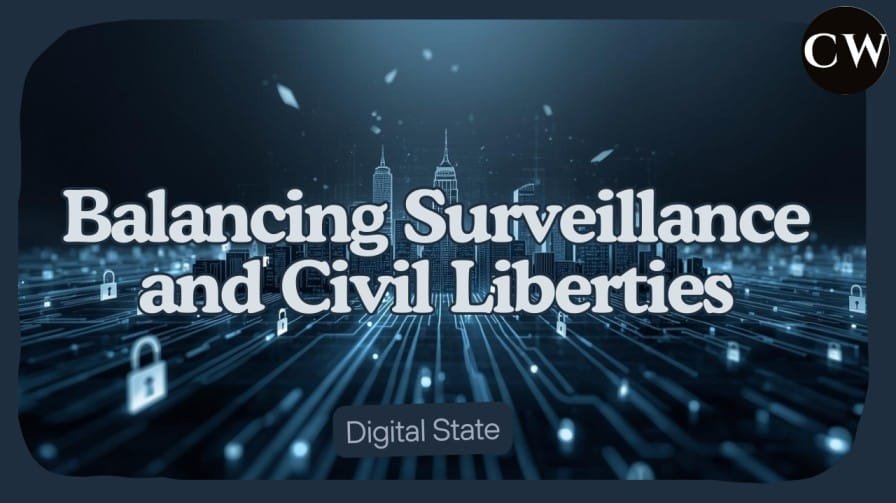
Balancing Surveillance and Civil Liberties in a Digital State

A professional digital illustration symbolizing the balance between government surveillance and personal privacy, showing technology elements like data streams, security cameras, and digital icons representing civil liberties.

As India rapidly embraces digital governance, technologies such as facial recognition, CCTV networks, artificial intelligence, and digital databases have significantly enhanced the state’s ability to prevent crime and strengthen internal security. However, these advancements also raise critical concerns about privacy, data protection, surveillance overreach, and civil liberties. This article examines the delicate balance between national security and individual rights, analyses India’s legal and constitutional framework, explores emerging challenges in the digital age, and highlights the way forward for ensuring accountable, transparent, and rights-based surveillance.

Intelligence-Led Policing and Preventive Security Governance: Building a Proactive Internal Security Framework for India

“Academic featured image showing law enforcement data analysis and security governance concepts, representing intelligence-led policing and preventive security strategies.

Introduction The nature of internal security has undergone a profound transformation in the twenty-first century. Traditional threats such as terrorism, insurgency, organised crime, and espionage continue to challenge national security, but they are now accompanied by emerging risks including cyberattacks, online radicalisation, financial crimes, disinformation campaigns, drone-enabled smuggling, and the misuse of artificial intelligence. These … Read more